Was it so long ago? Among those who lived these events, noone has been forgetting. This very specific page is trying to show, day after day, in pictures, what happened during this gloomy period: 1974.

(The sign shows "...access prohibited to foreigners")
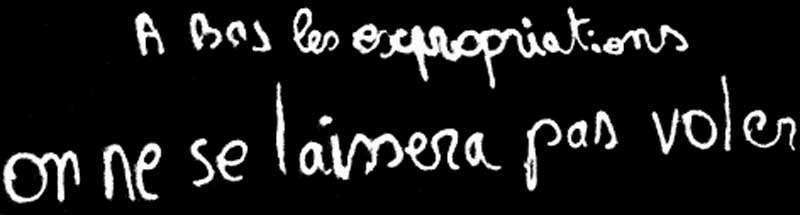
("NO expropriations.
We will not let us be stolen")


(1974: the walls of the village were covered with graffiti.
"EDF murderers", "EDF thieves, plunderers")

("Our district is not for sale,
bullshit Paris")
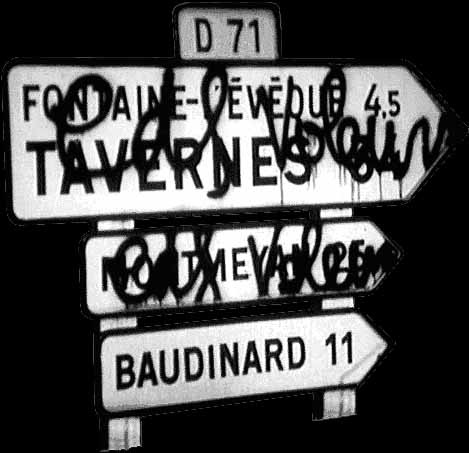
Beginning of 1974: these signs, located close to Garuby's bridge,
where under the water since a short time.

January 2, 1974.
Mr Signoret's home is for ever in a dead-end road ("Flooded road").
This road was driving to
Bauduen, Fontaine L'Evêque,
and Sainte-Croix through Garuby's bridge.
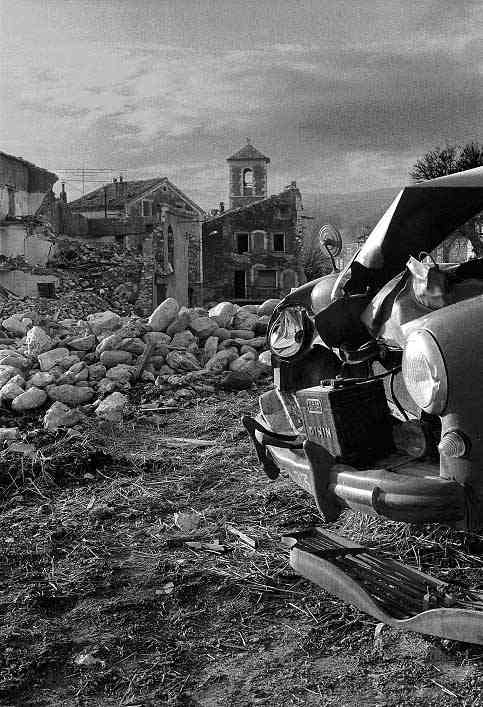
January 2, 1974.
A bulldozer's victim:
Henri Constant's car (a Peugeot "203") will never reach the new village.

January 2, 1974.
Sad general view of what was remaining from the village.

January 2, 1974.
From Riou's road, what was remaining from the village
("Le Riou" was the name of the very small creek flowing along the village).


January 2, 1974.
From Riou's bridge, what's remaining from the village.
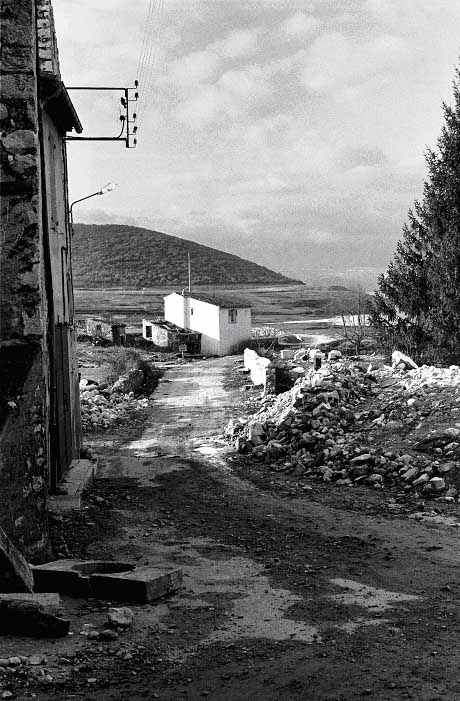
January 3, 1974.
Bauduen's road, formerly bounded with giant chestnut trees...

January 3, 1974.
The tiny square in the lower part of the village.

January 2, 1974.
This was the main street ("Grand'Rue").

January 3, 1974.
In front of the bakery, this was "Antonin's street".

« Few steps away from the Verdon River, it was a beautiful village
with its clocktower covered with tiles, which overwhelmed,
by a clock's height, elms and nettle trees » (Jean Giono).
January, 1974, here is what's remaining from the center of the village.
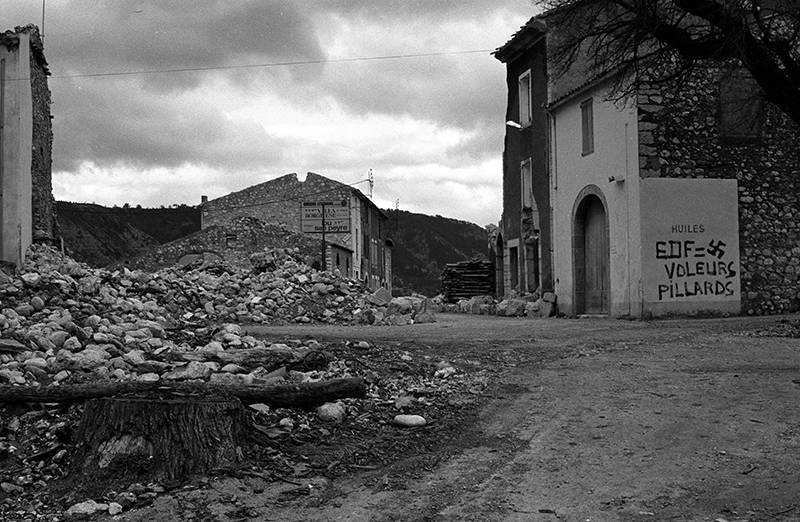

January 2, 1974.
When the sun was falling down,
the streets of the village were turning into horror movie sceneries.

February 9, 1974.
Huge white letters on the wall:
"EDF MURDERERS"

February 9, 1974.
There is almost nothing left from the lower part of the village.

February 9, 1974.
These stones were part of the chilhood's home
of the author of this page.
😥
The same stones, blocking the main street:

February 9, 1974.

February 9, 1974.

February 23, 1974.
On the left, it was "Calade's street" ("la Calade").
On the right, it was "main street" ("la Grand'rue").

February 9, 1974.
« What's more demanding than seeing
the place where you were born,
where you were teached reading at school,
where you have always been...
...vanishing. »
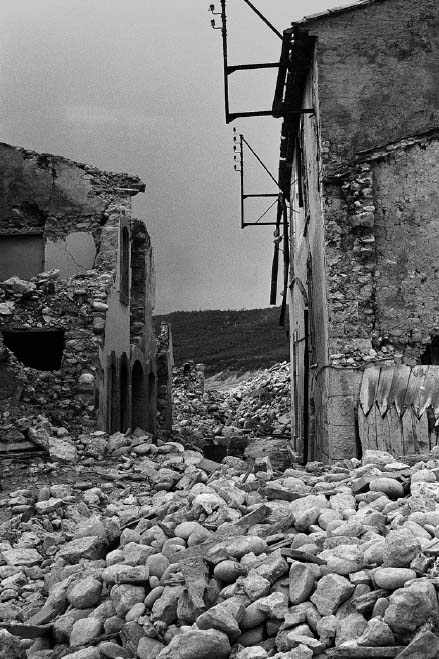
« ...What's more upsetting than looking at houses falling
one after the other
under bulldozers' impacts... »
(François Simian)
In front of the old Post Office, this was "main street" ("Grand'Rue").

This is how were destroyed most of inhabitants' homes.
In the background, Mr Signoret's home seems to challenge
the rising water of the lake. Just for a short time...
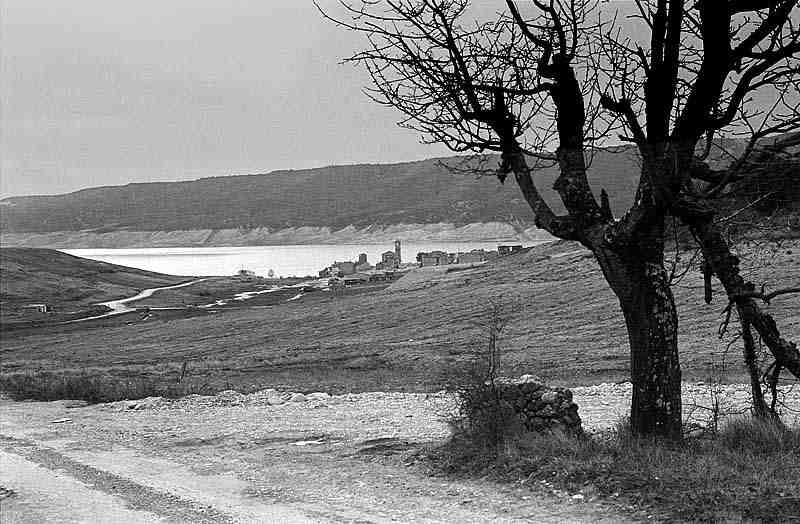

February 9, 1974.
The waters slowly preparing for the assault of Mr Signoret's home...
...Mr Signoret still refusing to leave his home.
At 8 o'clock March 1, 1974,
the authorities ("Gendarmerie")
removed the last inhabitants from the village.
(Details)


March 4, 1974.
The last inhabitants have been "moved" three days ago.
In the uninhabited village, the multihundred-years-old church
is still standing, almost alone in the middle of a field of ruins.
The church has only few hours left.

March 5, 1974, 16:45 :
the church of the old village disappears for ever
in an enormous explosion.
(Details)

The engineers dedicated to this task were afraid
their dynamite not to succeed destroying the church,
the thick walls of which have been challenging the centuries:
they were right.
The explosion destroyed the clocktower,
but let the walls of the apses still standing.
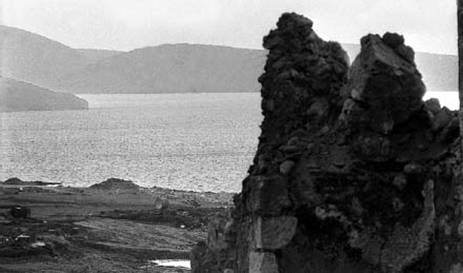
March 5, 1974.
This is what's remaining from the apses of the church.
During the following days, the bulldozers will erase
what's remaining from the church.

March 9, 1974.
A bulldozer still striving on the stones of the church.

March 9, 1974.
What's remaining from the village's main square?
Written on the wall: "For the gazoline, please ask the grocery"...

March 9, 1974.
The bulldozers have almost achieved their masterpiece.

March 28, 1974. Route d'Aiguines.
In the distance, a last bulldozer attempting to flatten the stones.
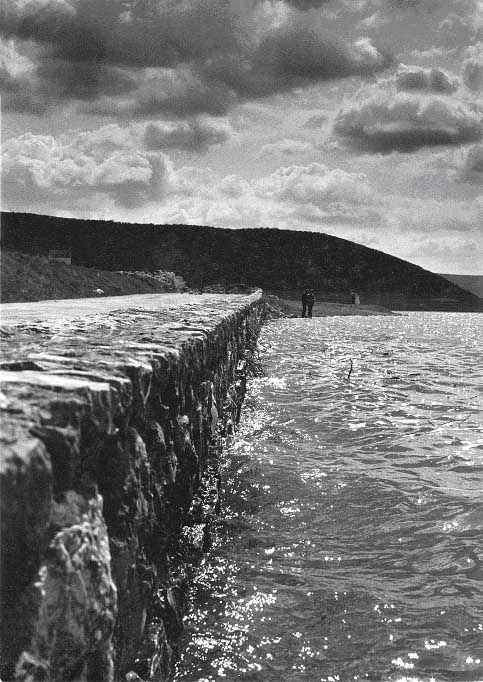
April 15, 1974.
The wall along Moustiers' road.

May, 1974 :
nature has being taken advantage of the situation.
From the village, only souvenirs remain...
...and a plain amount of stones.
This was 1974, more than 50 years ago...
This page was trying to show the atmosphere of the village,
and the trauma lived by the inhabitants.
A testimony from then? If you can read french,
try "the day when my home disappeared".
If you wish to know more,
do not hesitate to consult the
"Frequently Asked Questions".
To know how we reach this point,
read the sad story of the dam.

